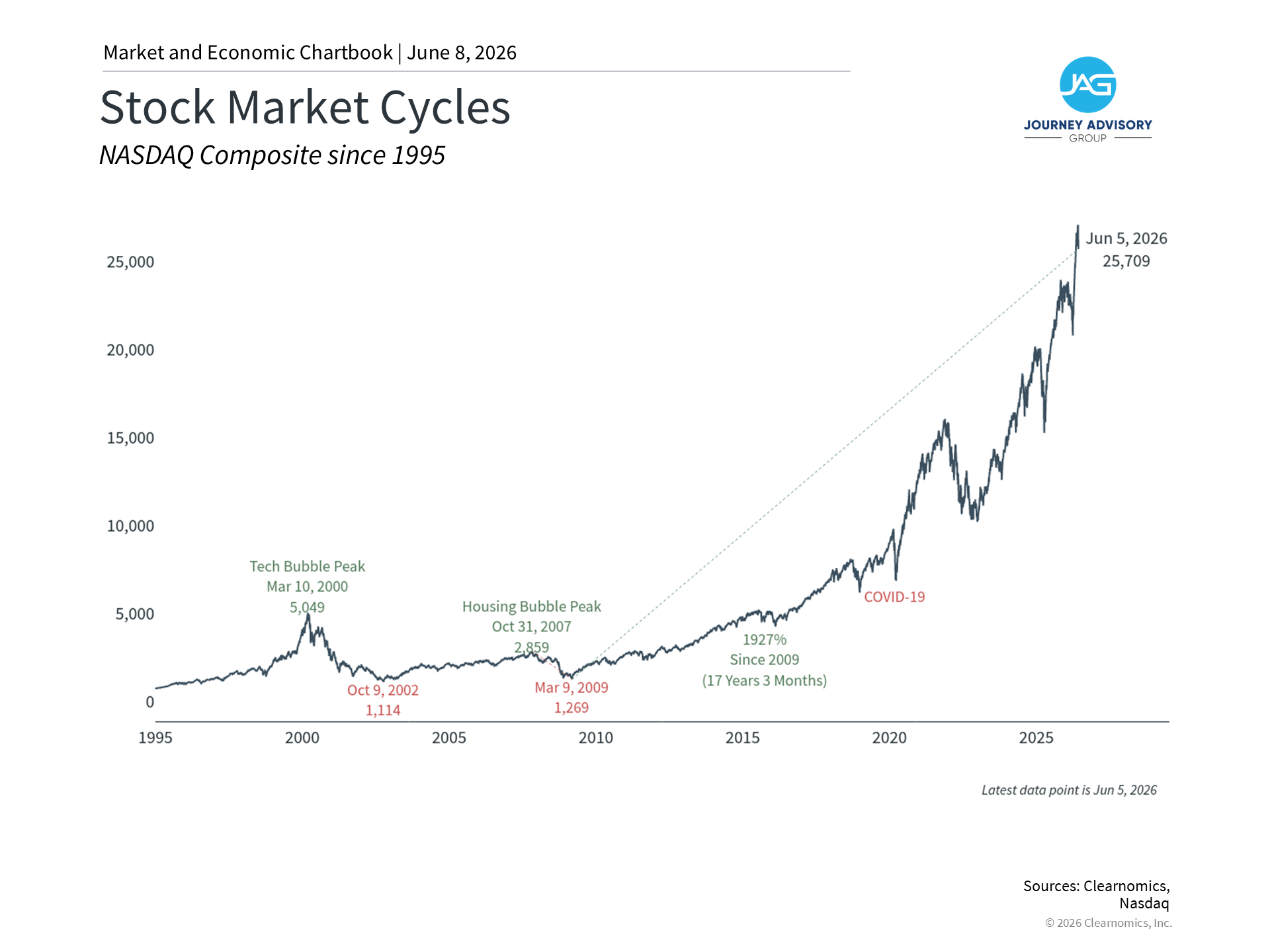
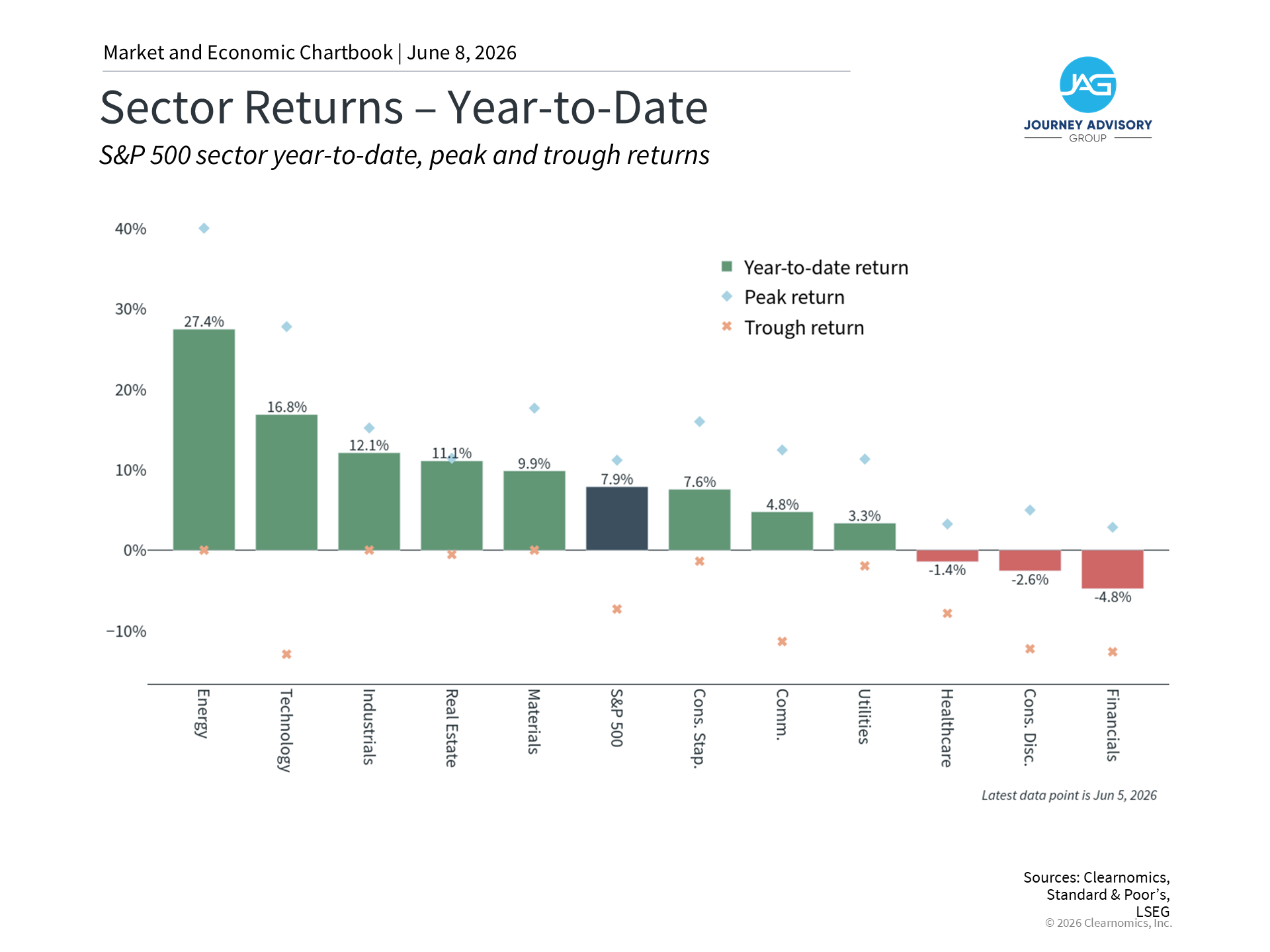
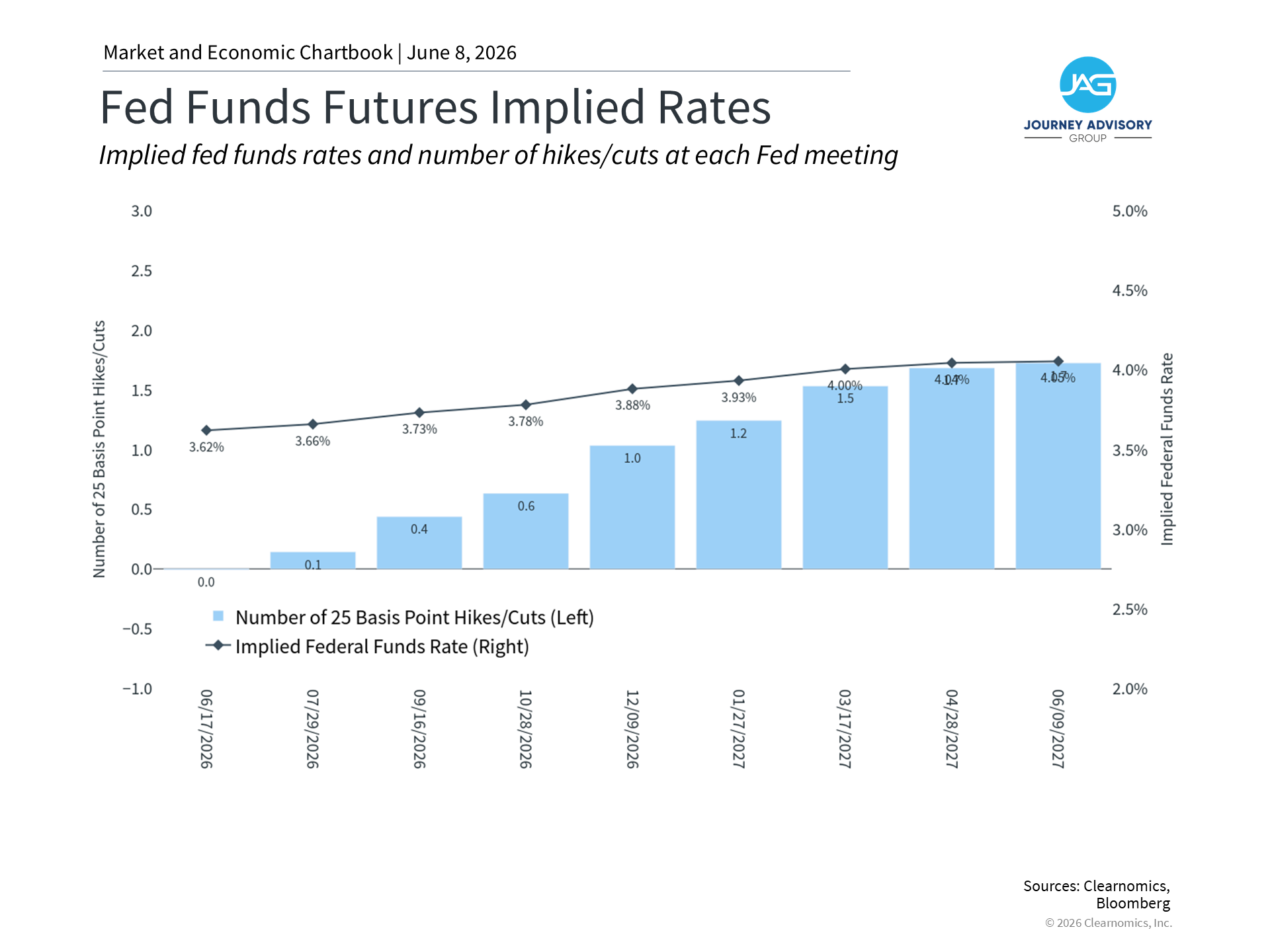
Stock markets have delivered strong returns recently, which can make sudden volatility feel even more unsettling. On Friday, June 5, the Nasdaq fell 4.2%, marking its biggest one-day decline in about a year. The S&P 500 and Dow Jones Industrial Average also moved lower, though the selloff was most pronounced in technology stocks. Interestingly, this drop came after a strong jobs report. Good news for the economy can sometimes unsettle markets because it raises the chance that the Federal Reserve (the Fed, which is the U.S. central bank) might raise interest rates before the year is out.1 A brief flare-up of tensions in the Middle East also added to investor concerns. While market swings are normal, understanding the reasons behind this latest volatility can help investors stay calm. For long-term investors in Cincinnati, Northern Kentucky, Dayton, and beyond, recent volatility is a reminder that market swings are part of investing. Even after the latest one-day drop, major market indexes have still posted healthy gains this year. History also shows that investors do not need to panic at the prospect of Fed rate hikes. While rising rates can create short-term volatility, markets have generally performed well across many different rate environments. The bigger question is whether your portfolio and financial plan are built to handle those shifts. The market has experienced renewed volatility
Major indexes like the S&P 500, Dow Jones Industrial Average, and the Nasdaq have climbed steadily in recent months. Part of this strength is what investors call a "relief rally," meaning markets rose because the Middle East conflict had less economic impact than feared. Strong corporate earnings and excitement about upcoming new stock listings also helped. Meanwhile, the bond market (where investors lend money to governments and companies in exchange for regular interest payments) has faced a tougher environment. Interest rates have risen, with the 10-year U.S. Treasury yield sitting at around 4.5%.2 Bond investors have been signaling that rates may stay higher for longer, and recently the stock market caught up to that same view. Technology stocks can be sensitive to interest rates
Technology stocks tend to be especially sensitive to interest rate changes. Investors buy these stocks because they expect high growth far into the future. When interest rates rise, future profits become less valuable in today's terms, which can push these stock prices lower. Even small rate changes can cause big swings in tech stock prices. The Magnificent 7, Apple, Microsoft, Nvidia, Amazon, Alphabet, Meta, and Tesla, are a clear example. From their peak in late 2021 to their low in late 2022, when inflation rose sharply and rates jumped, this group lost about half its value.3 They then recovered as rates stabilized and the Fed slowed its pace of increases. The Magnificent 7 now makes up about one-third of the S&P 5004. That means many investors may have more exposure to a small group of technology companies than they realize, even if they own a diversified index fund. This is one reason portfolio balance matters. Diversification is not just about owning many investments. It is about understanding what is actually driving your returns and where your risks are concentrated. Markets have performed well across Fed rate hike cycles
Expectations for Fed policy can shift quickly. Earlier this year, most observers expected the Fed to keep cutting rates. That view changed as energy prices rose and the job market strengthened. This is a reminder that the Fed reacts to economic conditions, including inflation, employment, wage growth, and financial conditions. When those data points change, market expectations can change too. Even if current market expectations prove correct, the Fed is not expected to raise rates until the end of the year, and only by 25 basis points (a very small amount, equal to one-quarter of one percentage point). This is modest compared to the 2022 to 2023 rate hike cycle, when the Fed raised rates from near zero all the way to 5.25% across 11 separate increases. It is also important to remember that rising rates do not automatically mean stocks will perform poorly. Markets have performed well across many different rate environments, including periods of rising rates. When the Fed raises rates because the economy is strong, healthy growth tends to support company earnings, which in turn supports stock prices. What Investors Should Take Away Recent market volatility reflects a mix of higher rate expectations, geopolitical uncertainty, and pressure on technology stocks after a strong run. These are real issues worth watching, but they do not automatically mean investors should abandon a long-term plan. Market pullbacks are uncomfortable, especially when they happen quickly. But they are also a normal part of investing. The goal is not to predict every short-term move. The goal is to have a portfolio that is aligned with your financial plan, risk tolerance, time horizon, and income needs. For investors nearing retirement or already retired, this is especially important. A market decline can feel very different when you are actively drawing income from your portfolio. That is why coordinated planning, including investment management, tax planning, income planning, and estate considerations, can be so valuable. The bottom line: volatility is not a reason to panic. It is a reason to revisit whether your plan is built for different market environments, including rising rates, falling rates, strong markets, and temporary setbacks. References 1. https://www.cmegroup.com/markets/interest-rates/cme-fedwatch-tool.html 2. https://home.treasury.gov/policy-issues/financing-the-government/interest-rate-statistics 3. The Magnificent 7 includes Apple, Microsoft, Nvidia, Amazon, Alphabet, Meta, and Tesla. The peak from 2021 to 2022 occurred on November 19, 2021, and the trough occurred on December 27, 2022. 4. Clearnomics research based on Standard & Poor's data 5. https://www.wsj.com/opinion/the-high-cost-of-the-feds-mission-creep-role-responsibility-monetary-policy-economy-20a352f8 6. https://www.federalreserve.gov/monetarypolicy/fomccalendars.htm#32979 Index Descriptions S&P 500 The Standard & Poor's 500 Index is a capitalization-weighted index of 500 stocks designed to measure performance of the broad domestic economy through changes in the aggregate market value of 500 stocks representing all major industries. Dow Jones The Dow Jones Industrial Average is comprised of 30 stocks that are major factors in their industries and widely held by individuals and institutional investors. NASDAQ The NASDAQ Composite Index measures all NASDAQ domestic and non-U.S. based common stocks listed on The NASDAQ Stock Market. The market value, the last sale price multiplied by total shares outstanding, is calculated throughout the trading day, and is related to the total value of the Index. | |||
This material prepared by Journey Advisory Group is for informational purposes only. It is not intended to serve as a substitute for personalized investment advice or as a recommendation or solicitation of any particular security, strategy or investment product. Economies and markets fluctuate. Facts presented have been obtained from sources believed to be reliable. Journey Advisory Group, however, cannot guarantee the accuracy or completeness of such information, and certain information may have been condensed or summarized from its original source. Past performance is not an indicator of future results. Copyright (c) 2026 Clearnomics, Inc. All rights reserved. The information contained herein has been obtained from sources believed to be reliable, but is not necessarily complete and its accuracy cannot be guaranteed. No representation or warranty, express or implied, is made as to the fairness, accuracy, completeness, or correctness of the information and opinions contained herein. The views and the other information provided are subject to change without notice. All reports posted on or via www.clearnomics.com or any affiliated websites, applications, or services are issued without regard to the specific investment objectives, financial situation, or particular needs of any specific recipient and are not to be construed as a solicitation or an offer to buy or sell any securities or related financial instruments. Past performance is not necessarily a guide to future results. Company fundamentals and earnings may be mentioned occasionally, but should not be construed as a recommendation to buy, sell, or hold the company's stock. Predictions, forecasts, and estimates for any and all markets should not be construed as recommendations to buy, sell, or hold any security--including mutual funds, futures contracts, and exchange traded funds, or any similar instruments. The text, images, and other materials contained or displayed in this report are proprietary to Clearnomics, Inc. and constitute valuable intellectual property. All unauthorized reproduction or other use of material from Clearnomics, Inc. shall be deemed willful infringement(s) of this copyright and other proprietary and intellectual property rights, including but not limited to, rights of privacy. Clearnomics, Inc. expressly reserves all rights in connection with its intellectual property, including without limitation the right to block the transfer of its products and services and/or to track usage thereof, through electronic tracking technology, and all other lawful means, now known or hereafter devised. Clearnomics, Inc. reserves the right, without further notice, to pursue to the fullest extent allowed by the law any and all criminal and civil remedies for the violation of its rights.  |

What’s Behind the Latest Market Swings? Rates, Tech Stocks, and Volatility