 | |||
The S&P 500 (an index that tracks 500 large U.S. companies) recently crossed 7,500 for the first time, setting a new record in a year full of all-time highs. Multiple sectors have contributed to this growth, which is encouraging for investors. This momentum has also sparked renewed interest in IPOs (initial public offerings, when a private company first sells shares to the public), especially those connected to artificial intelligence. This is happening even as concerns persist about inflation, high oil prices, and unresolved geopolitical tensions. Unlike the stock market, these challenges have pushed long-term interest rates higher. The 30-year U.S. Treasury yield (the interest paid on long-term government bonds) briefly hit a nearly 20-year high before settling near 5%. In times like these, keeping a balanced perspective is especially important. Technology stocks continue to support market performance
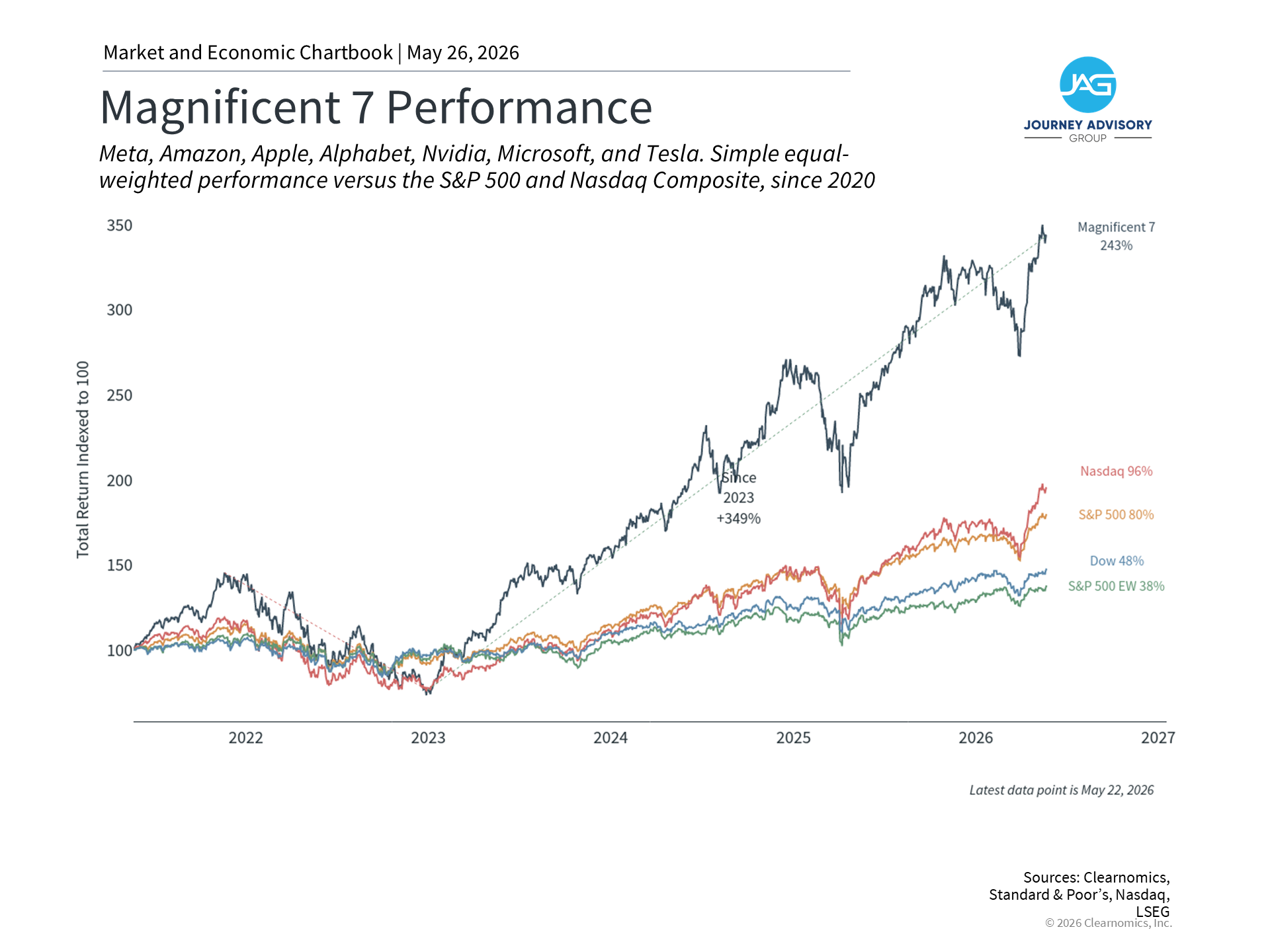
Technology-related stocks have played a meaningful role in portfolio returns this year. The Magnificent 7, a group of large technology companies, now makes up about 35% of the S&P 500. This means many investors may have more exposure to just a handful of companies than they realize, making thoughtful portfolio construction important. The rally has been supported by strong company earnings, not just optimism. S&P 500 earnings growth has been running well above its historical average. Analysts currently expect the Information Technology and Communication Services sectors to grow earnings by 35.8% and 17.3%, respectively, over the next year.1 However, stock prices have also become more expensive relative to earnings. The S&P 500 forward price-to-earnings ratio (a measure of how much investors pay for each dollar of expected earnings) sits near 21x, above the historical average of 16x. Technology stocks trade even higher, at around 24x.2 While this does not predict short-term moves, it is worth considering when thinking about long-term investing. Spreading investments across different sectors and company sizes can help manage this risk. IPO activity is returning to public markets
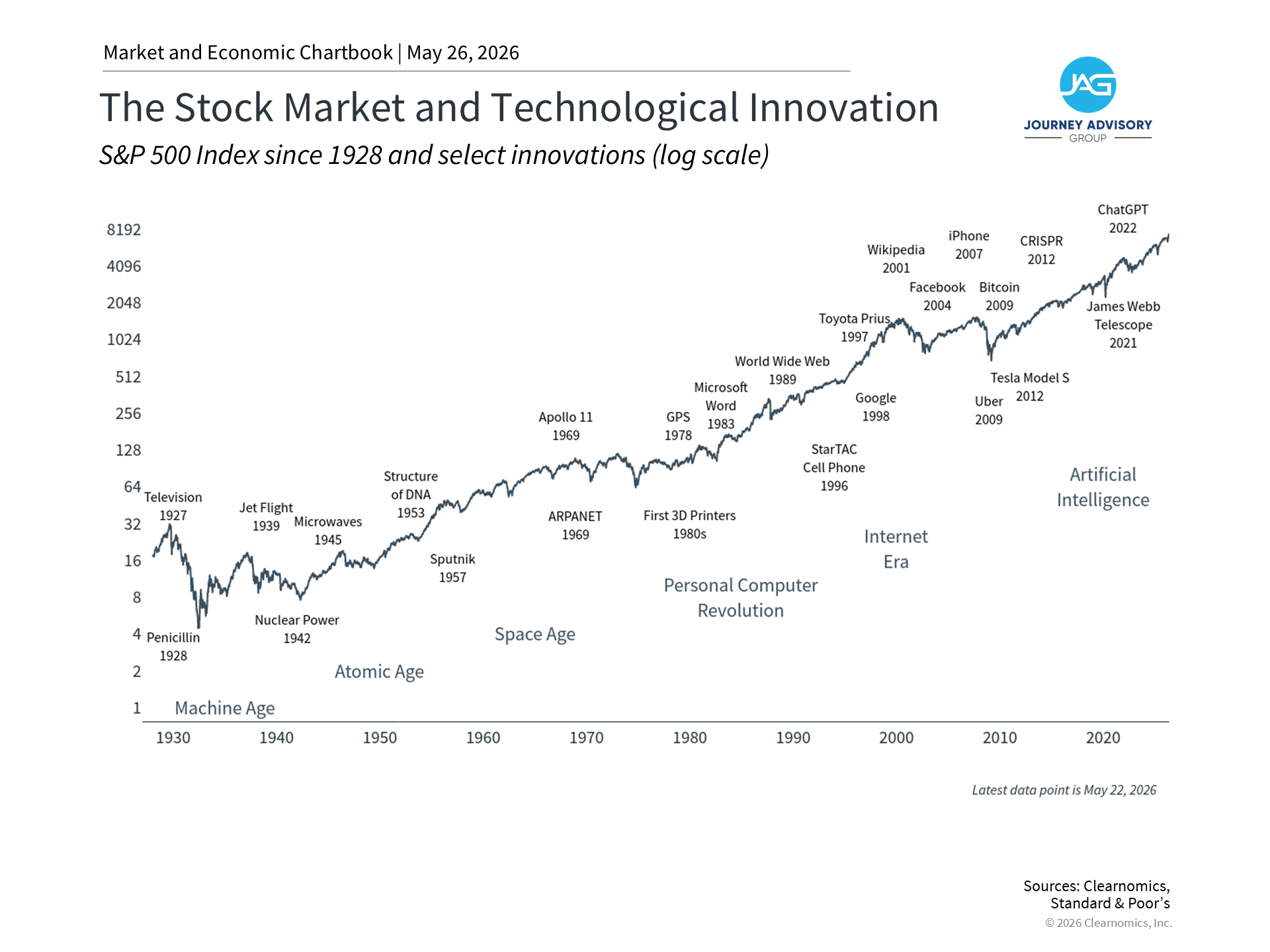
The stock market is always changing. Companies can be bought, merged, or go out of business, while new ones can join public markets through an IPO. Notably, the FT Wilshire 5000, an index originally designed to track about 5,000 U.S. companies, now contains only around 3,400 components,3 reflecting a trend of companies choosing to stay private for longer. Several high-profile companies, including SpaceX, Anthropic, and OpenAI, have been reported as considering public offerings.4 These companies have grown largely through private investment. Potential IPOs are a positive development because they make shares available to a wider range of investors. Over time, stock market indices automatically include new public companies as they grow, so long-term investors naturally gain exposure without needing to buy in at the moment of the IPO. It is natural to wonder whether buying into an IPO early can lead to quick gains, but this is not always the case. Institutional investors and company insiders are often the ones who truly participate in the IPO itself, and they have frequently been invested for years beforehand. Insiders are also typically subject to lock-up periods, often 180 days, during which they cannot sell their shares. When those periods end, added selling pressure can weigh on the stock price. IPO activity tends to peak during strong economic periods and can fade quickly, as seen with the post-pandemic SPAC (Special Purpose Acquisition Company) wave, highlighting the value of a long-term approach. Long-term interest rates have remained elevated
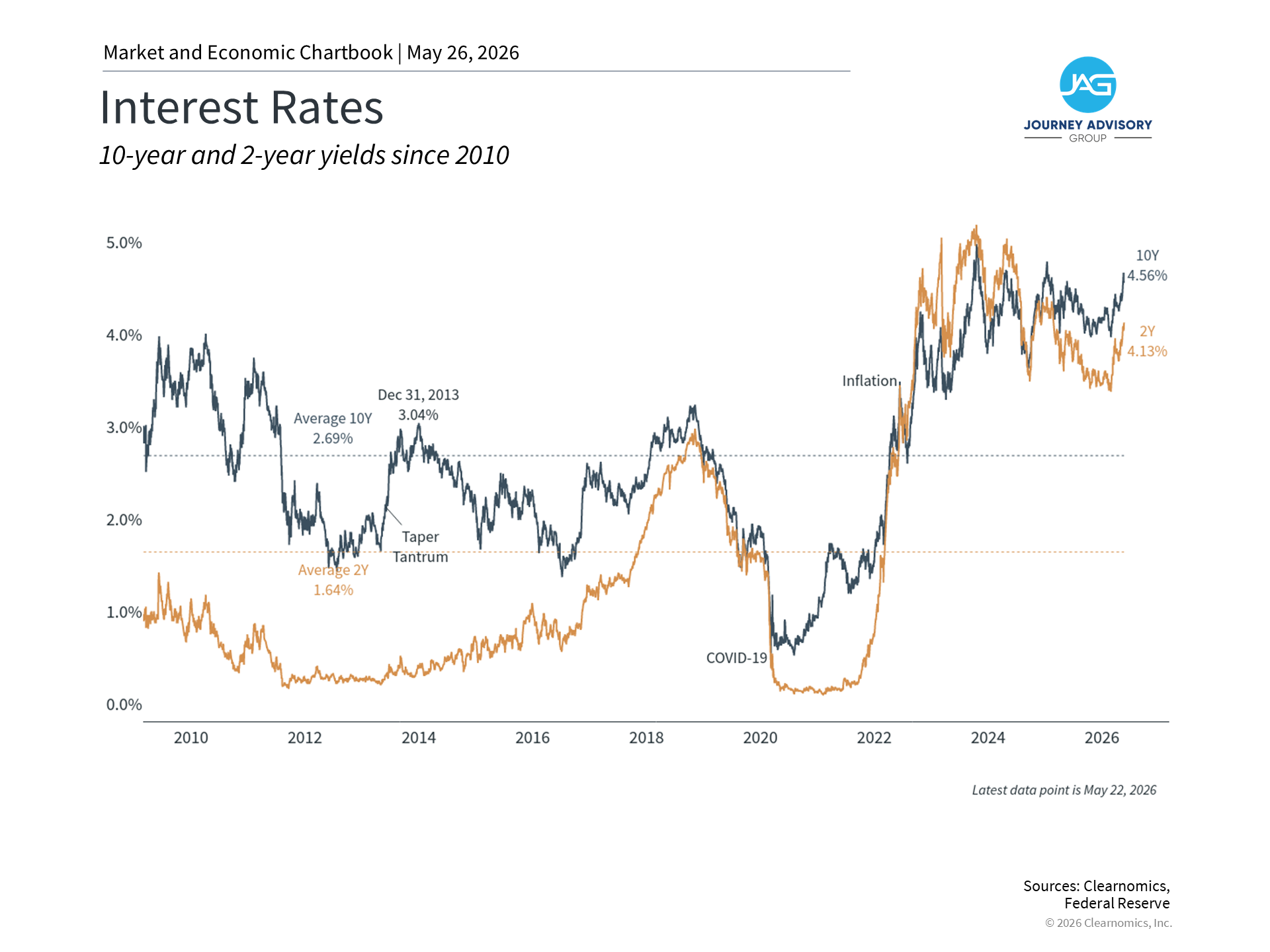
Even as stocks have climbed, long-term interest rates have also been rising, largely due to inflation concerns. Higher rates affect technology stocks in particular because they reduce the present value of future earnings, which is a key driver of these companies’ valuations. This dynamic contributed to the struggles of technology stocks in 2022, and their recovery as inflation eased in subsequent years. Higher rates also affect everyday finances. The 30-year fixed mortgage rate is now around 6.5%, above its long-term average of 6.02% since 1990, making homeownership less affordable for many. For businesses, higher borrowing costs can slow investment and reduce future earnings potential. On the other hand, higher rates mean bonds are now offering more attractive income. Investment grade corporate bonds (bonds issued by financially stable companies) yield 5.3%, compared to a long-term average of 3.8%. U.S. Treasury bonds yield 4.4%, well above their historical average of 2.2%.5 This makes bonds a more meaningful part of a diversified portfolio than they have been in recent years. The bottom line? While the stock market has reached new milestones this year, rising interest rates serve as a reminder that the broader economic environment may present future challenges. For long-term investors, the best approach is to maintain a balanced portfolio that can benefit from market growth as well as higher interest rates. References 1. Clearnomics research and LSEG data as of May 20, 2026 2. Ibid. 3. FT Wilshire 5000 Index Series Factsheet 4. Wall Street Journal IPO Coverage 5. Bloomberg U.S. Corporate Investment Grade and Bloomberg U.S. Treasury Index yields, as of May 22, 2026 | |||
This material prepared by Journey Advisory Group is for informational purposes only. It is not intended to serve as a substitute for personalized investment advice or as a recommendation or solicitation of any particular security, strategy or investment product. Economies and markets fluctuate. Facts presented have been obtained from sources believed to be reliable. Journey Advisory Group, however, cannot guarantee the accuracy or completeness of such information, and certain information may have been condensed or summarized from its original source. Past performance is not an indicator of future results. Copyright (c) 2026 Clearnomics, Inc. All rights reserved. The information contained herein has been obtained from sources believed to be reliable, but is not necessarily complete and its accuracy cannot be guaranteed. No representation or warranty, express or implied, is made as to the fairness, accuracy, completeness, or correctness of the information and opinions contained herein. The views and the other information provided are subject to change without notice. All reports posted on or via www.clearnomics.com or any affiliated websites, applications, or services are issued without regard to the specific investment objectives, financial situation, or particular needs of any specific recipient and are not to be construed as a solicitation or an offer to buy or sell any securities or related financial instruments. Past performance is not necessarily a guide to future results. Company fundamentals and earnings may be mentioned occasionally, but should not be construed as a recommendation to buy, sell, or hold the company's stock. Predictions, forecasts, and estimates for any and all markets should not be construed as recommendations to buy, sell, or hold any security--including mutual funds, futures contracts, and exchange traded funds, or any similar instruments. The text, images, and other materials contained or displayed in this report are proprietary to Clearnomics, Inc. and constitute valuable intellectual property. All unauthorized reproduction or other use of material from Clearnomics, Inc. shall be deemed willful infringement(s) of this copyright and other proprietary and intellectual property rights, including but not limited to, rights of privacy. Clearnomics, Inc. expressly reserves all rights in connection with its intellectual property, including without limitation the right to block the transfer of its products and services and/or to track usage thereof, through electronic tracking technology, and all other lawful means, now known or hereafter devised. Clearnomics, Inc. reserves the right, without further notice, to pursue to the fullest extent allowed by the law any and all criminal and civil remedies for the violation of its rights. |

Tech Stocks, IPOs, and Rising Interest Rates: What Investors Should Know