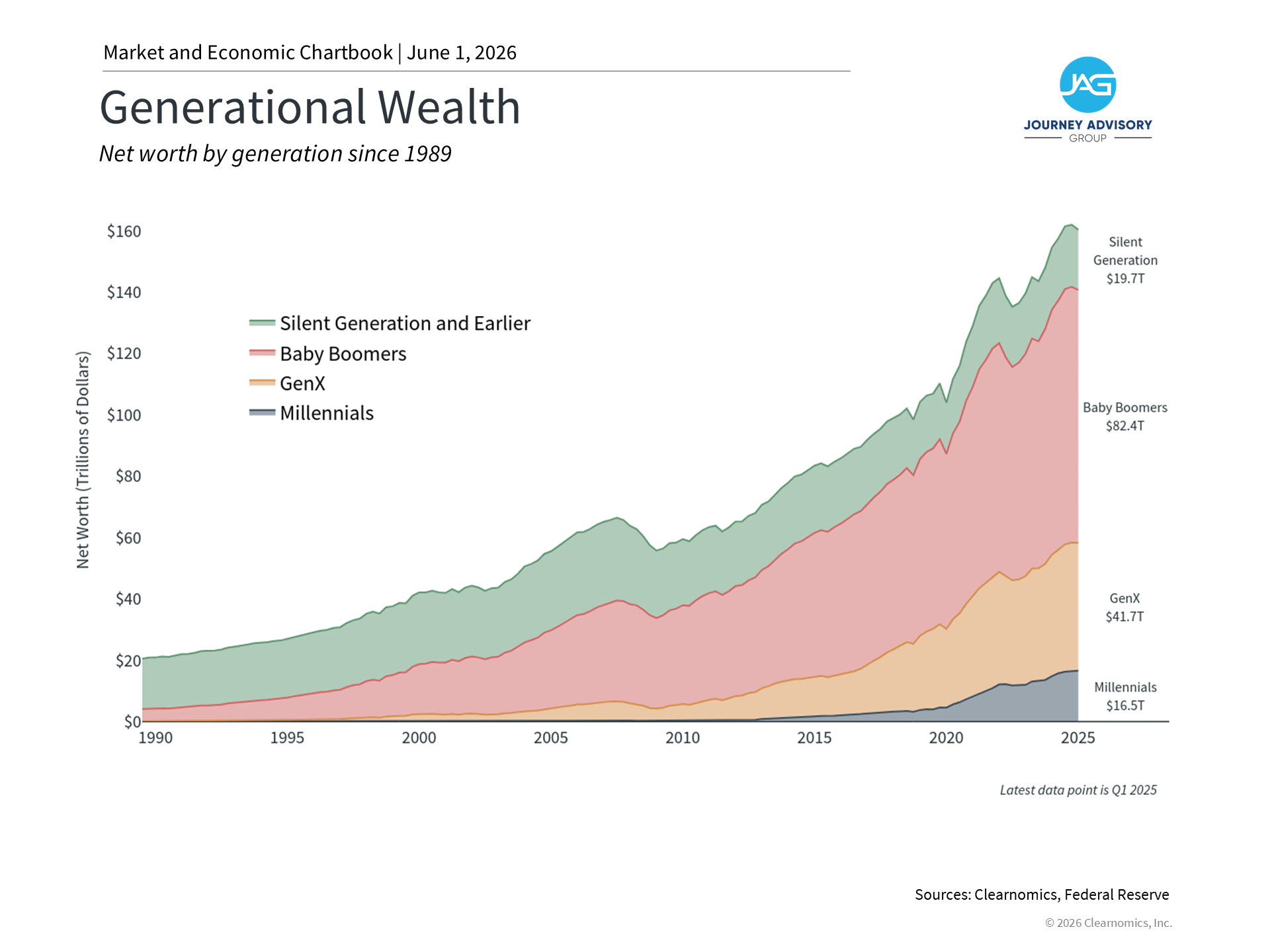
For many people, the wealth they have built over a lifetime represents years of hard work and sacrifice. It is meant to support a comfortable retirement, care for family, and create a lasting legacy. One of the most important questions in financial planning is not just how to grow or spend wealth, but how to pass it on in a smart and intentional way. Despite how important this is, a 2025 survey found that fewer than one in three Americans report having a will, and more than half say they have no estate plan at all.1 Without a plan in place, wealth built over decades can be reduced by taxes, legal issues, and unintended distributions. Estate planning helps solve this by creating a clear approach to transfer assets to the people and causes that matter most. Establishing the right framework for wealth transfers
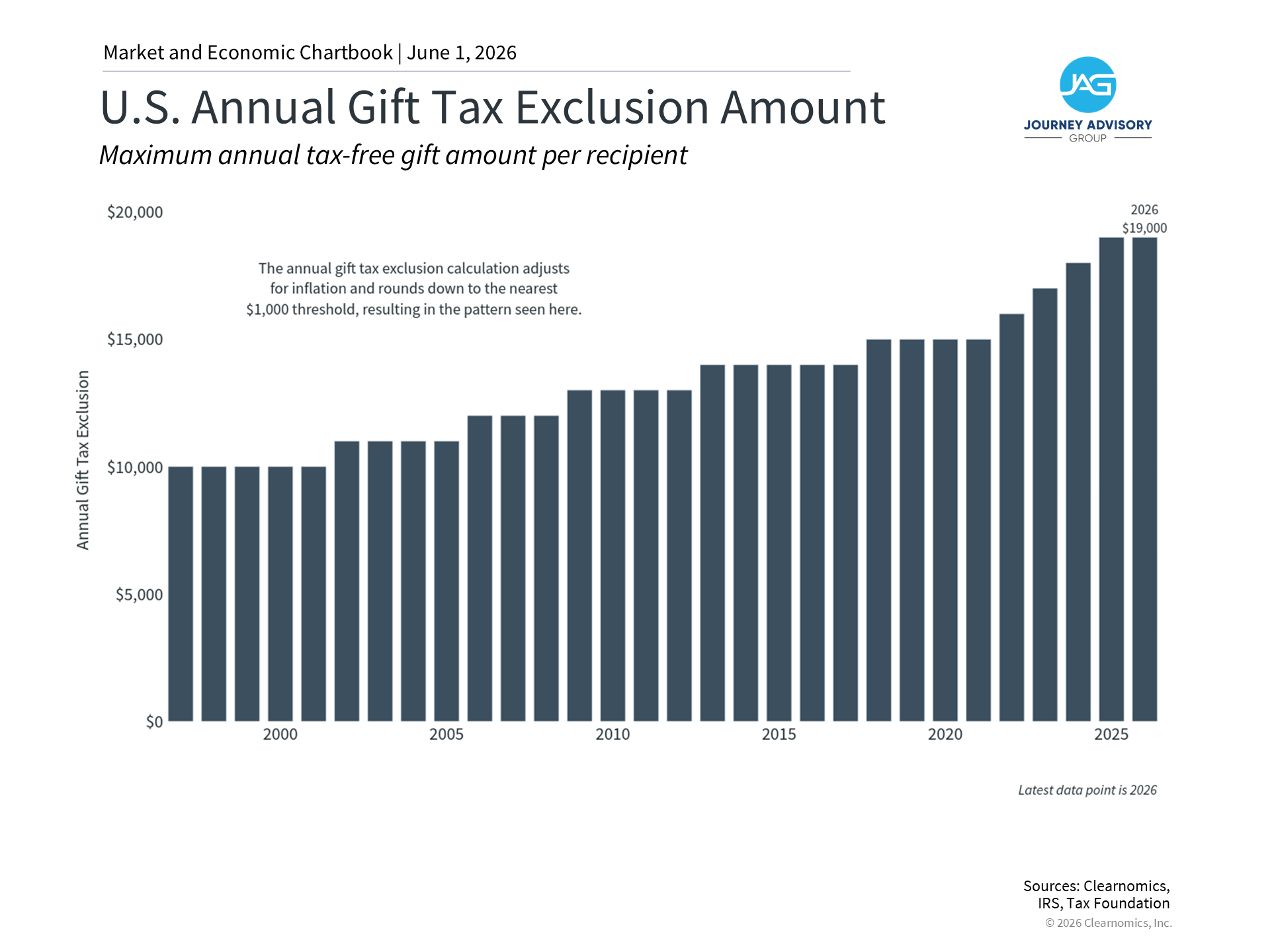
Every estate plan starts with three basic questions: what assets are being transferred, who will receive them, and when will the transfer happen? Assets like cash and publicly traded stocks and bonds are straightforward to pass on because they are easy to value and divide. Real estate, business interests, and other hard-to-sell assets are more complicated to transfer and may be difficult to split among multiple beneficiaries. Beneficiaries can include a spouse, children, grandchildren, other relatives, friends, or charities. Identifying who should receive what helps ensure assets go to the right people in the most effective way. The timing of transfers also matters. For example, by making gifts during one's lifetime, a donor can take advantage of annual gift exclusions to increase tax-free transfers. In 2026, the annual gift exclusion is $19,000 per recipient, or $38,000 if splitting the gift with a spouse.2 Over time, this can meaningfully reduce the taxable value of an estate. There are several strategies that can help meet different estate planning goals. For those looking to reduce estate taxes, irrevocable trusts are a common tool. One example is a Grantor-Retained Annuity Trust, or GRAT, where the grantor transfers assets into the trust and receives fixed payments over a set period. If the grantor outlives the trust term, the remaining assets pass to beneficiaries outside of the taxable estate. For families with charitable goals, a Charitable Remainder Trust, or CRT, allows beneficiaries to receive income for a set term, with the remainder going to a designated charity. This approach removes assets from the taxable estate and provides both gift and income tax deductions. CRTs work especially well with assets that have grown significantly in value, such as real estate or concentrated stock, converting them into a tax-advantaged income stream while supporting charitable causes. For families with business interests, planning around liquidity and continuity is essential. Buy-sell agreements define how ownership transfers if an owner passes away or becomes unable to work, helping prevent disputes. Family Limited Partnerships, or FLPs, allow senior family members to transfer ownership interests to the next generation while retaining management control. Because limited partnership interests may qualify for valuation discounts, families can transfer more value within gift and estate tax limits, while also protecting assets from outside creditors. Estate planning is an ongoing process, not a one-time task
Estate planning is not something you do once and forget. It requires regular review as personal circumstances and tax laws change. As families grow across generations, the complexity of wealth transfers increases. The Generation-Skipping Transfer Tax (GSTT) applies when assets are transferred to beneficiaries two or more generations younger than the donor, such as grandchildren. With careful planning, donors can reduce or avoid this additional tax. Tax laws can also shift significantly over time. Federal estate and gift tax exemptions have ranged from as low as $675,000 in 2001 to a high of $15 million per individual today.3 The 2017 Tax Cuts and Jobs Act doubled the exemption, and the One Big Beautiful Bill made these higher thresholds permanent. State-level rules add further complexity, as some states have their own estate or inheritance taxes with different exemption amounts. Staying current on policy changes is an important part of maintaining an effective estate plan. The bottom line? Estate planning requires a coordinated approach designed to preserve wealth, reduce taxes, and ensure that assets reach the right people, in the right way, at the right time. References 1. https://www.caring.com/resources/wills-survey 2. https://www.irs.gov/businesses/small-businesses-self-employed/whats-new-estate-and-gift-tax 3. https://www.irs.gov/newsroom/irs-releases-tax-inflation-adjustments-for-tax-year-2026-including-amendments-from-the-one-big-beautiful-bill | ||
This material prepared by Journey Advisory Group is for informational purposes only. It is not intended to serve as a substitute for personalized investment advice or as a recommendation or solicitation of any particular security, strategy or investment product. Economies and markets fluctuate. Facts presented have been obtained from sources believed to be reliable. Journey Advisory Group, however, cannot guarantee the accuracy or completeness of such information, and certain information may have been condensed or summarized from its original source. Past performance is not an indicator of future results. Copyright (c) 2026 Clearnomics, Inc. All rights reserved. The information contained herein has been obtained from sources believed to be reliable, but is not necessarily complete and its accuracy cannot be guaranteed. No representation or warranty, express or implied, is made as to the fairness, accuracy, completeness, or correctness of the information and opinions contained herein. The views and the other information provided are subject to change without notice. All reports posted on or via www.clearnomics.com or any affiliated websites, applications, or services are issued without regard to the specific investment objectives, financial situation, or particular needs of any specific recipient and are not to be construed as a solicitation or an offer to buy or sell any securities or related financial instruments. Past performance is not necessarily a guide to future results. Company fundamentals and earnings may be mentioned occasionally, but should not be construed as a recommendation to buy, sell, or hold the company's stock. Predictions, forecasts, and estimates for any and all markets should not be construed as recommendations to buy, sell, or hold any security--including mutual funds, futures contracts, and exchange traded funds, or any similar instruments. The text, images, and other materials contained or displayed in this report are proprietary to Clearnomics, Inc. and constitute valuable intellectual property. All unauthorized reproduction or other use of material from Clearnomics, Inc. shall be deemed willful infringement(s) of this copyright and other proprietary and intellectual property rights, including but not limited to, rights of privacy. Clearnomics, Inc. expressly reserves all rights in connection with its intellectual property, including without limitation the right to block the transfer of its products and services and/or to track usage thereof, through electronic tracking technology, and all other lawful means, now known or hereafter devised. Clearnomics, Inc. reserves the right, without further notice, to pursue to the fullest extent allowed by the law any and all criminal and civil remedies for the violation of its rights.  |

How to Pass On Family Wealth More Effectively with Estate Planning