With 2025 coming to an end, now is an opportune time for investors to evaluate decisions that may affect their tax obligations and overall financial well-being. Although financial planning should occur throughout the year, numerous tax-related deadlines align with December 31. Therefore, the closing weeks of the year present a valuable window for investors to assess their tax approaches and complete any actions that could influence their 2025 tax liability. This article examines three important considerations for investors: retirement account distribution management, Roth IRA conversions, and tax-efficient portfolio positioning. Given the complexity of these topics and the varied rules affecting different people, consulting with professional advisors is essential. December 31 deadline applies to Required Minimum Distributions
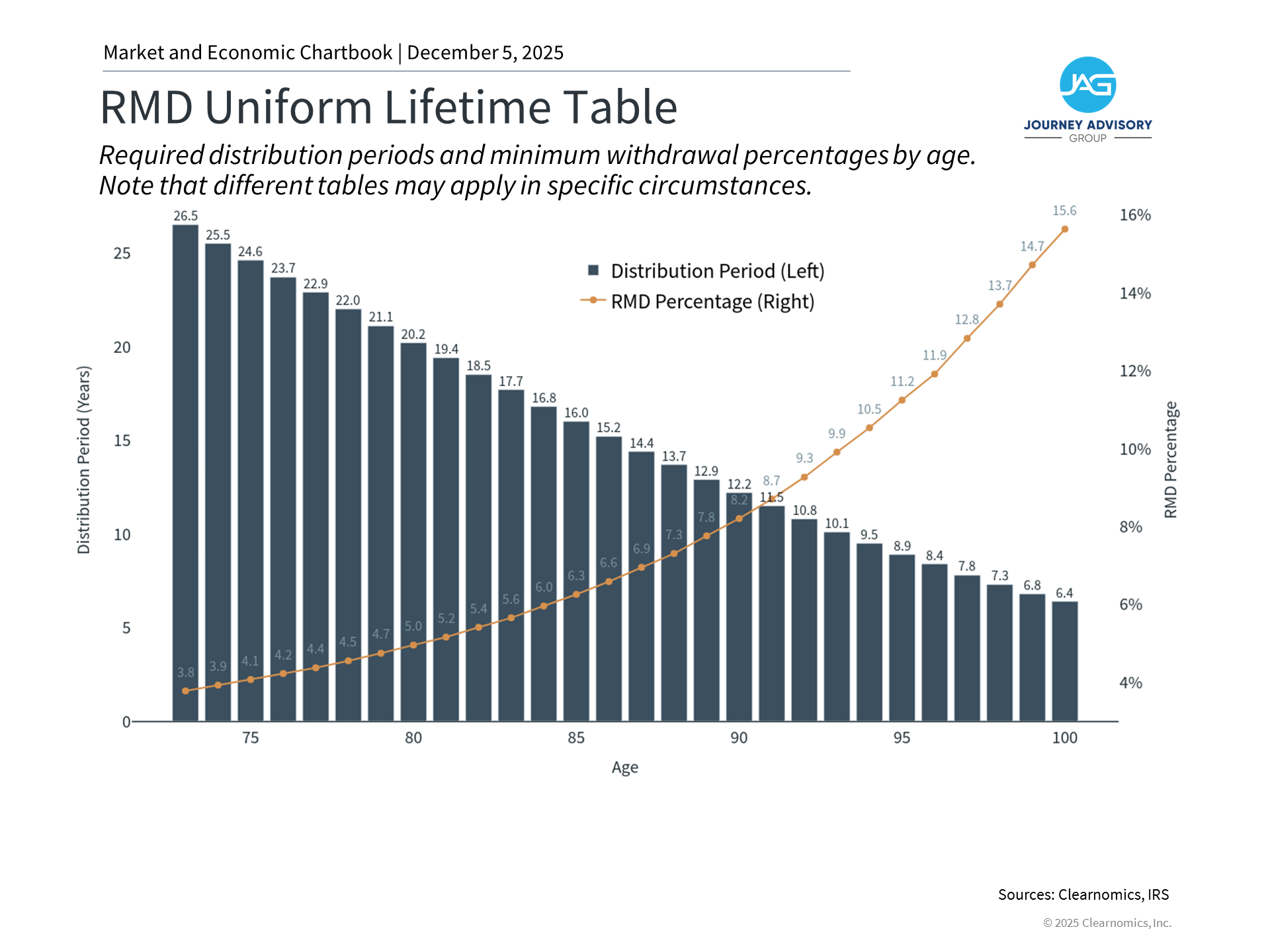
While much of the investment journey centers on accumulating wealth and building portfolios, the method of withdrawing from retirement savings carries equal importance. This becomes particularly critical when investors reach the age at which Required Minimum Distributions (RMDs) commence. December 31 stands as a crucial deadline in this context, as failing to meet it can trigger substantial IRS penalties—currently 25% of the amount that should have been withdrawn. RMDs represent mandatory annual withdrawals from traditional IRAs, 401(k)s, and similar tax-deferred retirement vehicles once account holders reach a specified age. The SECURE 2.0 Act, enacted by Congress in 2022, increased the RMD starting age to 73 for individuals who turned 72 after December 31, 2022. This threshold will rise again to 75 in 2033. The accompanying chart displays current distribution periods measured in years, along with corresponding required withdrawal percentages applicable to most account holders. Withdrawal amounts depend on the account balance from the previous year's December 31, modified by an IRS-published life expectancy factor. Despite straightforward calculations, the planning implications can prove considerably more intricate:
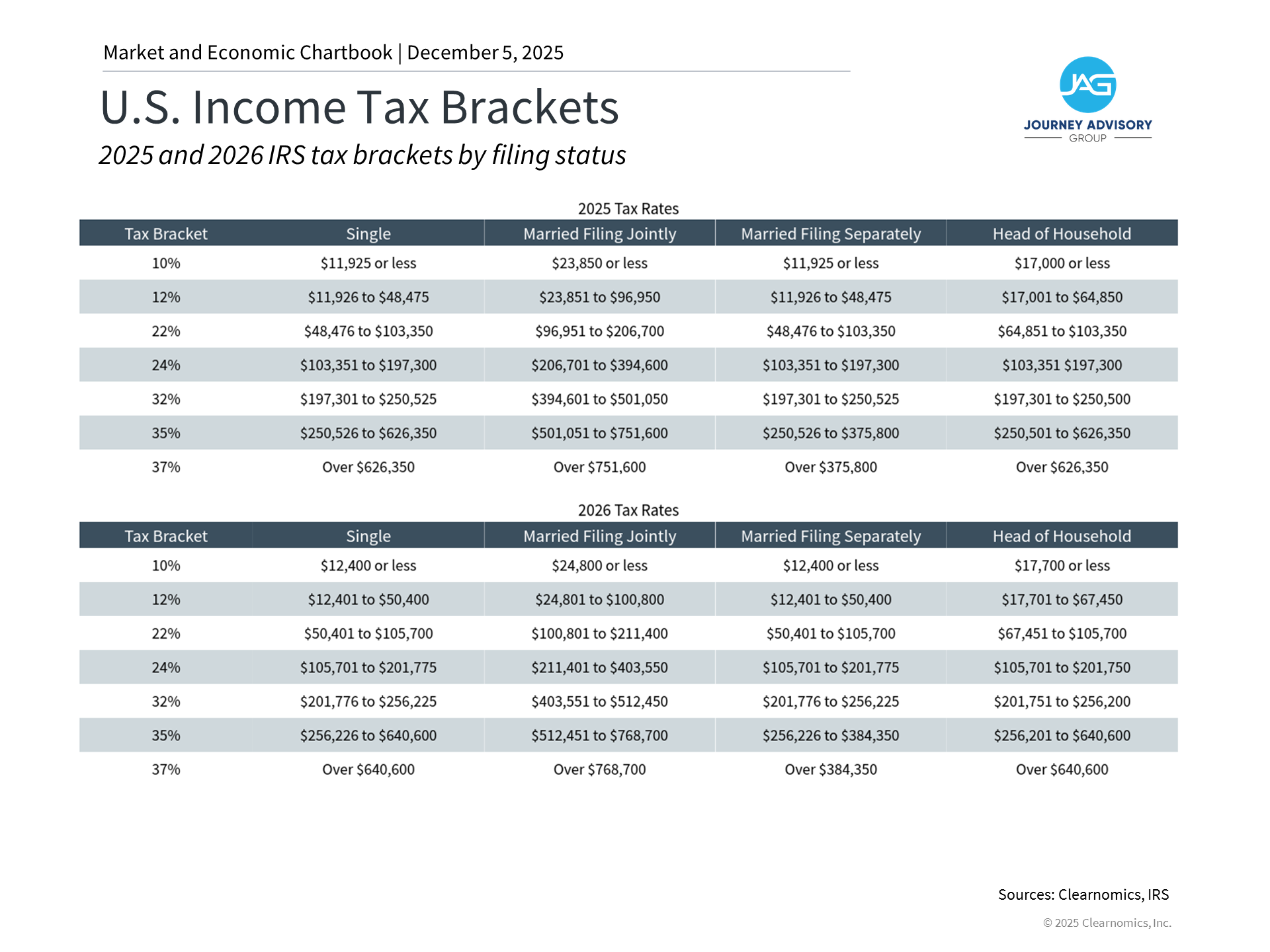
Prior to reaching age 73, investors should evaluate whether voluntary distributions make sense. Some may benefit from withdrawing amounts that maximize their current tax bracket without crossing into the next higher bracket. This approach proves especially beneficial when higher tax brackets are expected once RMDs commence. These considerations underscore why retirement planning demands a multi-year outlook rather than single-year focus. Today's environment presents strategic advantages for Roth conversions
Roth conversions represent another valuable year-end planning mechanism with a December 31 deadline. Similar to RMDs, they demand thorough evaluation and preparation. A Roth conversion entails moving assets from a traditional IRA into a Roth IRA, generating immediate taxable income while securing tax-free growth and future withdrawals. While Roth contributions face income restrictions, conversions remain accessible to all investors without income limitations. For high-income individuals exceeding Roth IRA contribution thresholds, these transactions are frequently termed "backdoor" Roth conversions. The "One Big Beautiful Bill" enacted earlier this year permanently extends the reduced tax rates established under the Tax Cuts and Jobs Act. Many investors currently face more advantageous tax rates compared to potential future scenarios. Given mounting national debt and ongoing fiscal deficits, concerns about future tax rate increases add another dimension to conversion decisions. Important factors influencing Roth conversion decisions include:
Tax-loss harvesting provides opportunities to reduce tax liability and offset gains Unlike RMDs and Roth conversions targeting retirement accounts, tax-loss harvesting applies to taxable investment portfolios and can optimize annual tax outcomes. This technique involves selling depreciated investments to recognize capital losses, which then offset capital gains recognized during the year. This must also occur before December 31 to affect the current tax year, making it an essential component of comprehensive investment and financial planning. How does this function practically? When an investor sells investments during 2025 and recognizes capital gains, harvesting losses from other holdings can offset those gains on a dollar-for-dollar basis. Tax loss harvesting remains beneficial even during years without substantial gains. When losses surpass gains, investors can apply up to $3,000 of net capital losses against ordinary income each year, carrying forward any remaining losses to subsequent years. Multiple factors influence tax-loss harvesting effectiveness:
Effective coordination of these strategies demands thorough planning The effectiveness of year-end financial planning stems not merely from executing isolated strategies, but from coordinating them strategically to optimize overall benefits. Naturally, maintaining perspective on broader objectives remains crucial. While minimizing current-year taxes holds value, it shouldn't undermine overarching financial goals. Optimal planning weighs both near-term tax consequences and long-term wealth building, ensuring current decisions align with future aspirations. The bottom line? Many investors can benefit from timely year-end actions. This is an ideal moment to examine your tax position and financial circumstances. | ||
This material prepared by Journey Advisory Group is for informational purposes only. It is not intended to serve as a substitute for personalized investment advice or as a recommendation or solicitation of any particular security, strategy or investment product. Economies and markets fluctuate. Facts presented have been obtained from sources believed to be reliable. Journey Advisory Group, however, cannot guarantee the accuracy or completeness of such information, and certain information may have been condensed or summarized from its original source. Past performance is not an indicator of future results. Copyright (c) 2025 Clearnomics, Inc. All rights reserved. The information contained herein has been obtained from sources believed to be reliable, but is not necessarily complete and its accuracy cannot be guaranteed. No representation or warranty, express or implied, is made as to the fairness, accuracy, completeness, or correctness of the information and opinions contained herein. The views and the other information provided are subject to change without notice. All reports posted on or via www.clearnomics.com or any affiliated websites, applications, or services are issued without regard to the specific investment objectives, financial situation, or particular needs of any specific recipient and are not to be construed as a solicitation or an offer to buy or sell any securities or related financial instruments. Past performance is not necessarily a guide to future results. Company fundamentals and earnings may be mentioned occasionally, but should not be construed as a recommendation to buy, sell, or hold the company's stock. Predictions, forecasts, and estimates for any and all markets should not be construed as recommendations to buy, sell, or hold any security--including mutual funds, futures contracts, and exchange traded funds, or any similar instruments. The text, images, and other materials contained or displayed in this report are proprietary to Clearnomics, Inc. and constitute valuable intellectual property. All unauthorized reproduction or other use of material from Clearnomics, Inc. shall be deemed willful infringement(s) of this copyright and other proprietary and intellectual property rights, including but not limited to, rights of privacy. Clearnomics, Inc. expressly reserves all rights in connection with its intellectual property, including without limitation the right to block the transfer of its products and services and/or to track usage thereof, through electronic tracking technology, and all other lawful means, now known or hereafter devised. Clearnomics, Inc. reserves the right, without further notice, to pursue to the fullest extent allowed by the law any and all criminal and civil remedies for the violation of its rights.  |

3 Tax Planning Opportunities Before December 31